Digital Chess Clock Buying Guide
Shop chess sets on Amazon
SponsoredAs an Amazon Associate, Chess Set Station earns from qualifying purchases. See our affiliate disclosure for details.



A chess clock isn't necessary for casual, untimed games, but it becomes useful the moment you want to play with a time limit — whether that's for club play, tournament practice, or just keeping a friendly game from dragging on for hours.
Why you'd want a chess clock
Clocks add a time pressure element that changes how a game is played, and they're required for essentially all competitive over-the-board chess. Even outside formal play, a clock can make casual games feel sharper and prevent one player from taking excessively long on a single move.
How digital chess clocks work
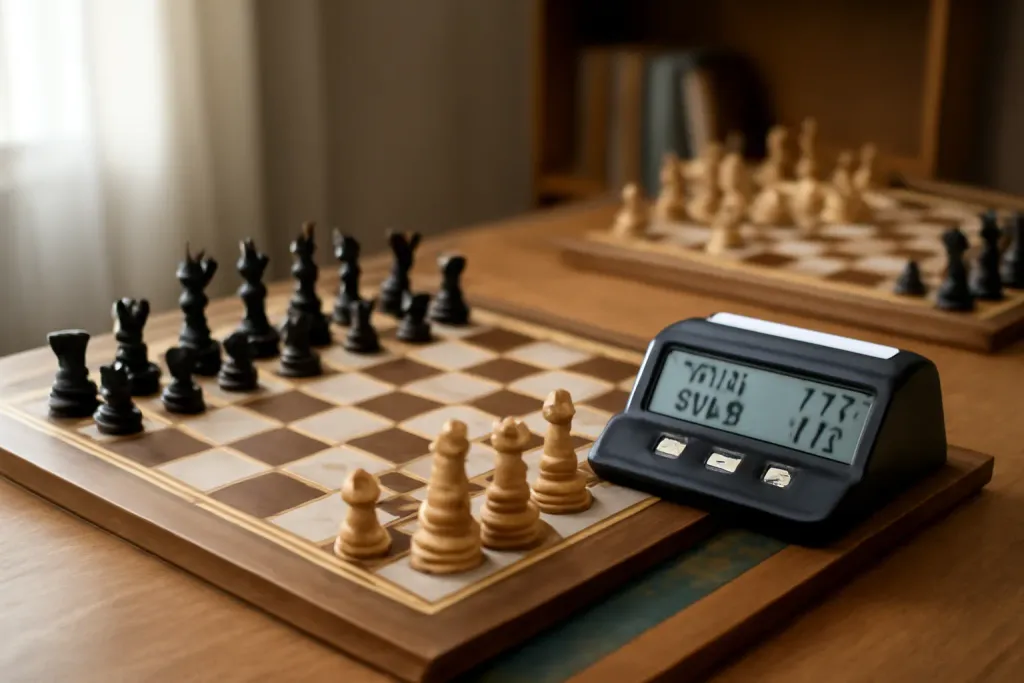
A chess clock has two separate time displays, one per player, and only one side's clock runs at a time. After making a move, a player presses a button on their side, which stops their own clock and starts their opponent's. Digital clocks (as opposed to older mechanical analog ones) allow more flexible time control settings and are now the standard at most clubs and tournaments.
Time controls and increments explained
A "time control" defines how much time each player gets, sometimes with an added increment per move. For example, "15|10" means 15 minutes of base time plus 10 seconds added after each move. Digital clocks let you set these directly, and many come with common presets built in (blitz, rapid, classical) alongside custom settings. If you're new to clocks, look for a model with straightforward, clearly labeled controls rather than one aimed at advanced tournament directors.
Features worth checking
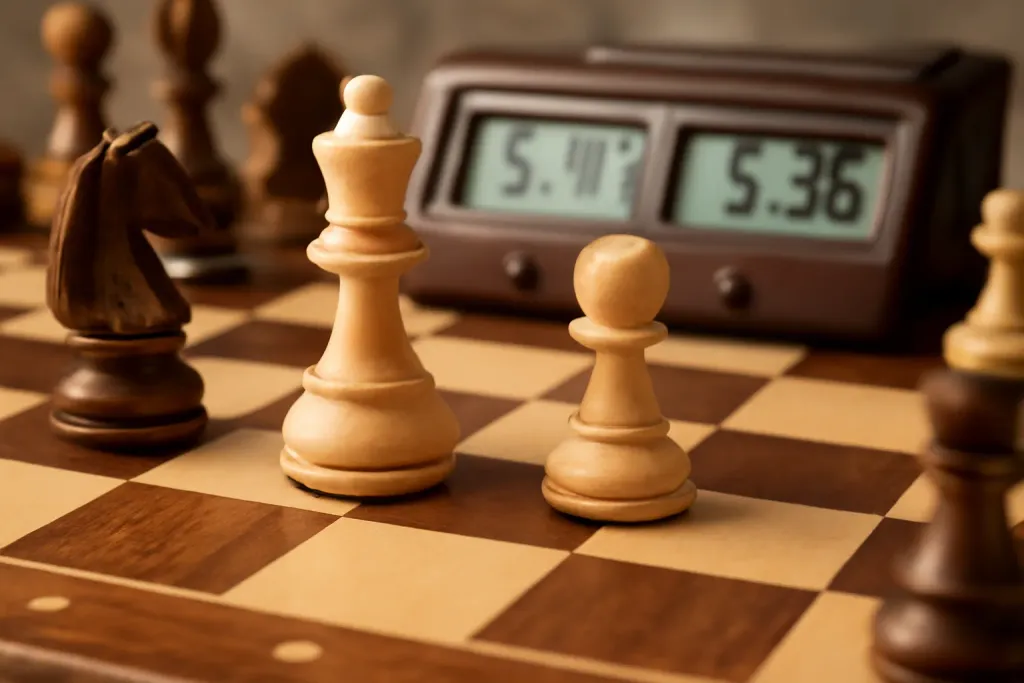
- Ease of setup — simple button-and-display clocks are easier for beginners than ones requiring multiple menu steps for common settings.
- Move counter — useful for tracking move numbers, especially in longer games.
- Battery type and life — most digital clocks run on standard batteries; check the listing for expected battery life.
- Display readability — larger, high-contrast displays are easier to read at a glance during a game.
Buying tips
A clock is a standalone accessory — it doesn't need to match your board or pieces, so you can choose based purely on features and usability. If you're building out a full setup, see our chess accessories category and our tournament chess set guide for what else pairs well with regular timed play.
Browse digital chess clocks currently available.
Check price on AmazonFrequently asked questions
- Do I need a chess clock to play chess?
- No — clocks are only necessary for timed games. Casual, untimed games don't require one at all.
- What's the difference between a digital and analog chess clock?
- Analog clocks use mechanical dials and can only really support simple time controls without increments. Digital clocks display time numerically and support increments, delays, and multiple custom time control settings.
- What time control should a beginner use with a clock?
- A longer control, such as 15 or 30 minutes per player with a small increment, gives new players time to think without the pressure of very fast formats like blitz.